BTL Emsella: The Non-Surgical Solution for Urinary Incontinence and Pelvic Health
BTL Emsella uses high-intensity electromagnetic energy to strengthen the pelvic floor non-invasively. Learn how this fully-clothed, no-downtime treatment helps with urinary incontinence at Refresh TMS in Weston, FL.
The Problem Nobody Talks About: Pelvic Floor Weakness
Millions of adults live with urinary incontinence and pelvic floor weakness, yet it remains one of the least discussed health concerns in medicine. If you have ever leaked urine while laughing, sneezing, or exercising, you are not alone. BTL Emsella in Weston, FL offers a non-surgical solution that strengthens the pelvic floor without medications, invasive procedures, or downtime. At Refresh TMS, Dr. Paula-Ann Francis, MD, provides medically supervised Emsella treatments designed to restore confidence and quality of life for both women and men.
Urinary incontinence affects an estimated 25 million adults in the United States, with women experiencing it at nearly twice the rate of men. Despite its prevalence, many people wait years before seeking help. The good news is that effective, non-invasive treatment exists.
What Is the Pelvic Floor and Why Does It Weaken?
The pelvic floor is a group of muscles forming a supportive hammock at the base of the pelvis. These muscles hold the bladder, uterus, prostate, and rectum in place while controlling urination, bowel movements, and sexual function. Several factors weaken the pelvic floor over time:
- Pregnancy and childbirth — carrying and delivering a baby stretches and sometimes damages pelvic floor muscles
- Menopause — declining estrogen reduces muscle tone and tissue elasticity
- Aging — natural muscle mass loss affects the pelvic floor like any other muscle group
- Prostate surgery — men who undergo prostatectomy frequently experience weakened pelvic floor muscles
- Chronic straining — obesity, chronic cough, and high-impact exercise place ongoing stress on these muscles
What Is BTL Emsella and How Does It Work?
BTL Emsella is an FDA-cleared device that uses High-Intensity Focused Electromagnetic (HIFEM) technology to stimulate deep pelvic floor muscle contractions. During a single 28-minute session, the device delivers approximately 11,200 supramaximal contractions — far more intense and targeted than any voluntary Kegel exercise could achieve.
These electromagnetic pulses trigger complete muscle contractions that strengthen, tone, and re-educate the muscles responsible for bladder control. A 2019 multi-center study found that 81% of patients reported significant symptom reduction after six sessions (Samuels et al., Lasers in Surgery and Medicine). Unlike traditional Kegel exercises, where studies show up to 50% of women perform them incorrectly, HIFEM ensures every contraction is deep, complete, and therapeutically effective.
What Conditions Does BTL Emsella Treat?
Emsella pelvic floor therapy addresses a range of conditions related to pelvic floor weakness:
Stress and Urge Urinary Incontinence
Leaking urine during physical activity, coughing, or sneezing is the hallmark of stress incontinence. The treatment strengthens the muscles that support the urethra, reducing or eliminating involuntary leaks. A 2024 study demonstrated a 59.6% improvement in incontinence symptom scores after HIFEM treatment (Tosun et al., PMID: 39640007). For urge incontinence and overactive bladder, HIFEM technology helps restore proper neuromuscular communication, reducing urgency episodes.
Postpartum Pelvic Floor Recovery
New mothers frequently experience weakened pelvic floor muscles after pregnancy and delivery. This therapy offers an efficient, non-invasive path to recovery, allowing women to regain bladder control and core stability without surgery or extended physical therapy.
Men's Pelvic Health
This treatment is not exclusively for women. Men who experience urinary incontinence following prostatectomy or due to age-related pelvic floor weakening benefit significantly from HIFEM therapy, regaining continence more quickly after surgery.
What to Expect During an Emsella Session at Refresh TMS
One of the most appealing aspects of this treatment is how simple each session is:
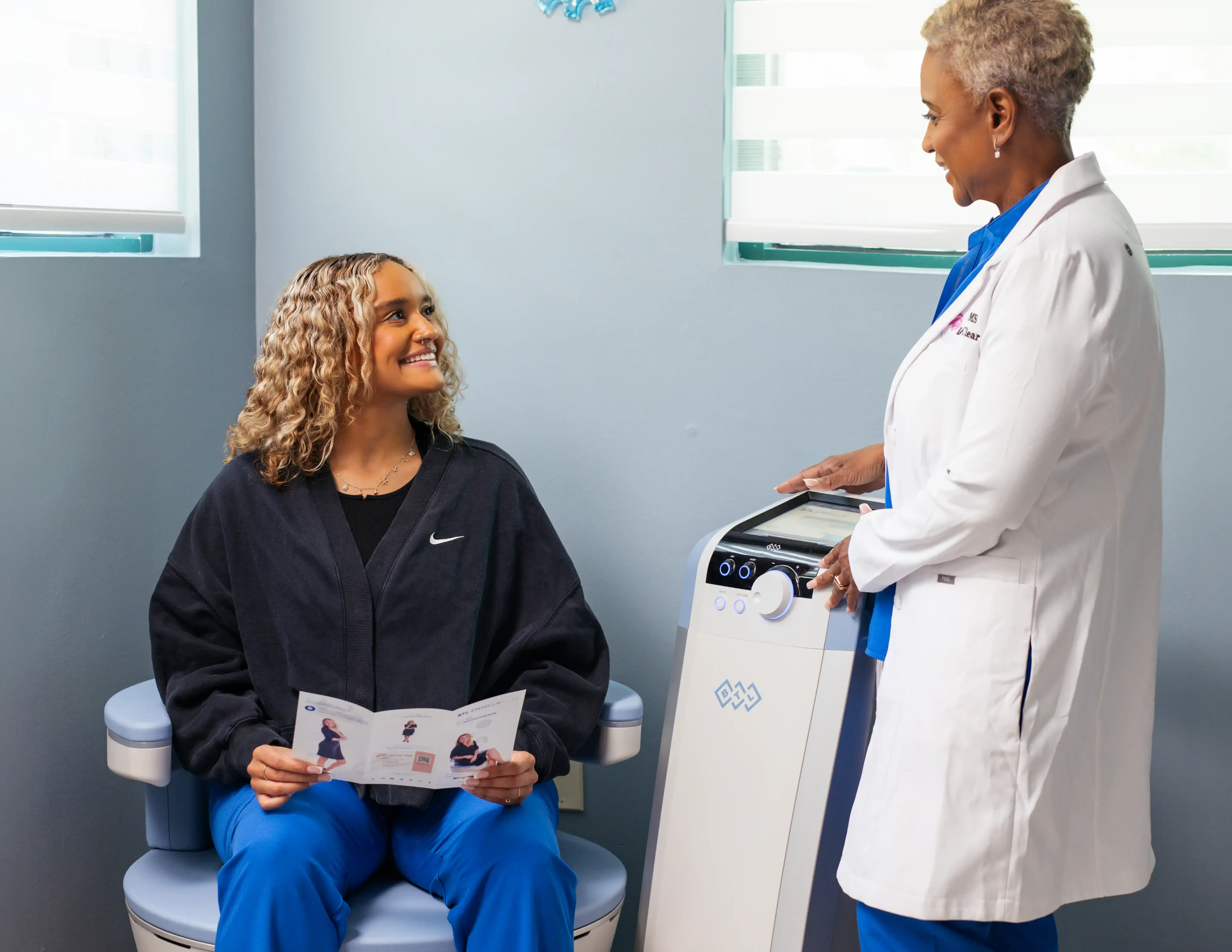
- Arrive fully clothed. There is no need to undress. You sit directly on the treatment chair in your regular clothing.
- Sit comfortably for 28 minutes. You will feel tingling and pelvic floor muscle contractions. Most patients describe the sensation as unusual but not painful.
- Resume normal activities immediately. There is no downtime, recovery period, or restrictions.
At Refresh TMS, every session is overseen by Dr. Paula-Ann Francis, a board-certified psychiatrist with more than 13 years of clinical experience, ensuring each treatment is calibrated to your specific needs.
How Many Sessions Are Needed?
The standard protocol consists of six sessions scheduled twice per week over three weeks. Clinical data shows:
- After 6 sessions: 81% of patients report significant improvement (Samuels et al., PMID: 31172580)
- At 1-month follow-up: Pad usage reduced by more than 50% (Tosun et al., PMID: 39640007)
- At 3 months: Symptom scores improve by 64%, with ongoing benefits (Samuels et al., 2019)
Many patients notice improvement after just two or three sessions. Maintenance sessions every few months help sustain results long-term.
Is Emsella Covered by Insurance?
Most insurance plans do not currently cover BTL Emsella, as it is generally classified as an elective wellness procedure. However, coverage varies by plan. At Refresh TMS, our team can provide procedure codes and documentation to support any insurance inquiry, and we offer consultation to help you understand payment options for your urinary incontinence treatment.
Who Is a Good Candidate for BTL Emsella in Weston, FL?
Emsella may be right for you if you:
- Experience stress, urge, or mixed urinary incontinence
- Are a postpartum mother rebuilding pelvic floor strength
- Have undergone prostate surgery and are managing incontinence
- Struggle with performing Kegel exercises correctly
- Want a non-invasive alternative to surgical intervention
Treatment may not be appropriate for patients with cardiac pacemakers, defibrillators, metal implants in the pelvic area, or women who are pregnant. A consultation with Dr. Francis will determine whether this treatment is right for you.
Take the First Step Toward Pelvic Health
Pelvic floor weakness and urinary incontinence are common, but they do not have to be permanent. BTL Emsella offers a clinically proven, non-invasive path to stronger pelvic muscles and better bladder control — all without surgery, medication, or downtime.
Ready to strengthen your pelvic floor without surgery? Book your Emsella consultation at Refresh TMS in Weston, FL — (754) 216-0840.
Frequently Asked Questions About BTL Emsella
Does Emsella work?
Yes. Multiple clinical studies confirm HIFEM technology significantly improves urinary incontinence. A multi-center study found 81% of patients experienced significant symptom reduction, and a 2020 comparative study showed HIFEM significantly outperformed electrical stimulation for pelvic floor rehabilitation (Silantyeva et al., PMID: 32146133).
How many Emsella sessions do I need?
The standard protocol is six sessions, twice per week over three weeks. Most patients notice improvement after two to three sessions, with optimal results over the full course. Periodic maintenance sessions help sustain results.
Is Emsella painful?
No. Patients remain fully clothed during the entire 28-minute session. You will feel tingling and muscle contractions, which most patients describe as unusual but not uncomfortable. There is no pain, downtime, or recovery period.
Can men use Emsella?
Absolutely. While widely known for treating female incontinence, Emsella is equally effective for men with pelvic floor weakness, particularly after prostate surgery. HIFEM technology strengthens the same muscle groups, helping restore bladder control.
References
- Samuels JB, Pezzella A, Berenholz J, Alinsod R. Safety and efficacy of a non-invasive high-intensity focused electromagnetic field (HIFEM) device for treatment of urinary incontinence and enhancement of quality of life. Lasers Surg Med. 2019;51(9):760-766. (PMID: 31172580) — 81% of patients reported significant symptom reduction; 50% average improvement in ICIQ-SF scores after six sessions.
- Tosun H, Akinsal EC, Sonmez G, Baydilli N, Demirci D. Is the high-intensity focused electromagnetic energy an effective treatment for urinary incontinence in women? Ther Adv Chron Dis. 2024. (PMID: 39640007) — 59.6% improvement in incontinence symptom scores at one-month follow-up.
- Silantyeva E, Zarkovic D, Soldatskaia R, et al. Electromyographic evaluation of the pelvic muscles activity after high-intensity focused electromagnetic procedure and electrical stimulation in women with pelvic floor dysfunction. Sex Med. 2020. (PMID: 32146133) — HIFEM demonstrated 48-59% improvement in EMG parameters, significantly outperforming electrical stimulation.
- Silantyeva E, Zarkovic D, Astafeva E, et al. A comparative study on the effects of high-intensity focused electromagnetic technology and electrostimulation for the treatment of pelvic floor muscles and urinary incontinence in parous women. Female Pelvic Med Reconstr Surg. 2021;27(4):269-273. (PMID: 31860567) — HIFEM achieved 52% improvement in pelvic floor disability scores compared with 18% for electrostimulation.