When Antidepressants Stop Working: Is TMS Therapy the Next Step?
If antidepressants are not working, you are not out of options. Learn about treatment-resistant depression and how TMS therapy, Spravato, and IV ketamine at Refresh TMS in Weston, FL can help you find relief.
You followed all the steps. You took the medication your doctor prescribed, waited weeks for it to work, adjusted the dose, tried a second one, and maybe even a third. And still, the fog has not lifted. If this sounds like your experience, you are not alone — and you are not out of options. For patients in Weston, FL and the surrounding South Florida communities dealing with treatment resistant depression, there are advanced therapies that go beyond traditional antidepressants.
At Refresh TMS, board-certified psychiatrist Dr. Paula-Ann Francis, MD, helps patients who have not responded to conventional medications explore evidence-based alternatives — including TMS therapy for depression, Spravato for treatment-resistant depression, and IV ketamine infusion therapy. With over 13 years of psychiatric experience, Dr. Francis specializes in identifying the right next step when standard treatments fall short.
What Is Treatment-Resistant Depression?
Treatment-resistant depression (TRD) is generally defined as major depressive disorder that has not adequately responded to at least two different antidepressant medications, each taken at an appropriate dose for a sufficient duration — typically six to eight weeks. According to the National Institute of Mental Health, roughly one-third of people with depression do not achieve full remission with first-line antidepressant therapy.
TRD is not a personal failure. Depression is a complex neurobiological condition, and the brain chemistry that drives it varies significantly from person to person. Factors such as genetics, co-occurring conditions like anxiety or PTSD, chronic stress, and even the specific neurotransmitter pathways involved can all influence how well a particular medication works.
How Is Treatment-Resistant Depression Diagnosed?
There is no single lab test for TRD. Diagnosis is primarily clinical and based on treatment history. Dr. Francis conducts a thorough psychiatric evaluation to explore options that includes reviewing your medication history, dosage timelines, side effect patterns, and any co-occurring mental health conditions. She also considers whether an accurate diagnosis was made initially — sometimes what appears to be treatment resistance is actually a misdiagnosis, such as bipolar disorder presenting as unipolar depression.
Key criteria that suggest treatment resistant depression in Weston FL patients include:
- Failure to respond to two or more antidepressants from different classes
- Each medication was taken at therapeutic doses for at least 6 weeks
- Persistent symptoms of sadness, fatigue, hopelessness, or inability to function
- Adequate medication adherence was confirmed
Treatment Options for Treatment-Resistant Depression
When antidepressants are not working, the good news is that several FDA-cleared and evidence-backed treatments have shown strong results. At Refresh TMS, Dr. Francis offers three primary options for patients with TRD.
TMS Therapy (Transcranial Magnetic Stimulation)
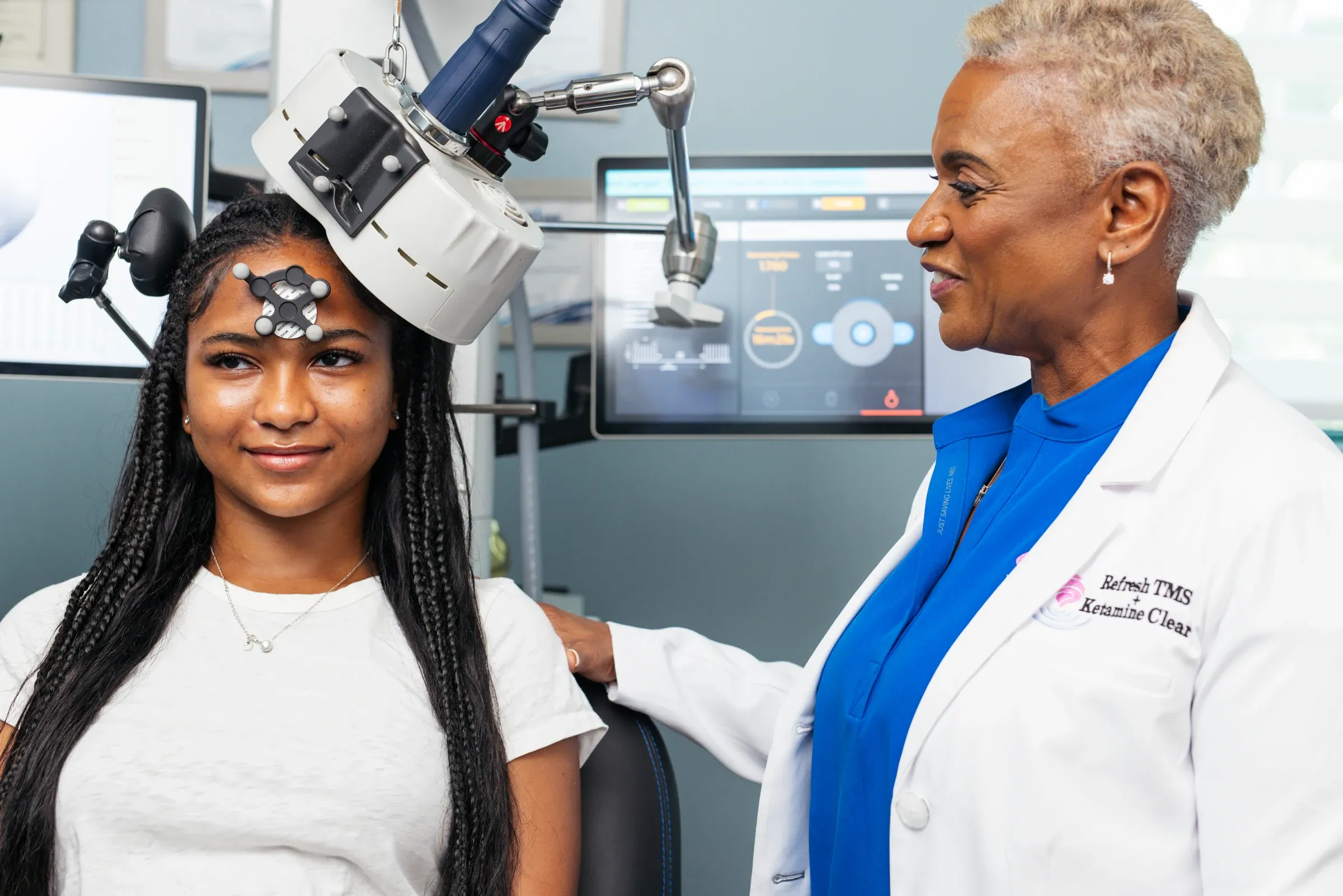
TMS therapy uses focused magnetic pulses to stimulate nerve cells in areas of the brain associated with mood regulation — specifically the left dorsolateral prefrontal cortex. It is FDA-cleared for treatment-resistant depression and does not require anesthesia or sedation. Sessions last approximately 20 to 40 minutes, and patients can return to normal activities immediately afterward. TMS has no systemic side effects like weight gain, sexual dysfunction, or fatigue that are common with antidepressants. Clinical studies have demonstrated that approximately 50 to 60 percent of TRD patients experience meaningful improvement with TMS, and about one-third achieve full remission.
Spravato (Esketamine Nasal Spray)
Spravato is an FDA-approved nasal spray derived from ketamine, administered in a certified clinical setting under medical supervision. It works on the glutamate system — a different neurotransmitter pathway than traditional antidepressants — which may explain why it helps patients who have not responded to serotonin- or norepinephrine-based medications. Patients typically notice mood improvement within hours to days, rather than the weeks required by conventional antidepressants. Spravato is administered twice weekly initially, then tapered to once weekly or biweekly.
IV Ketamine Therapy
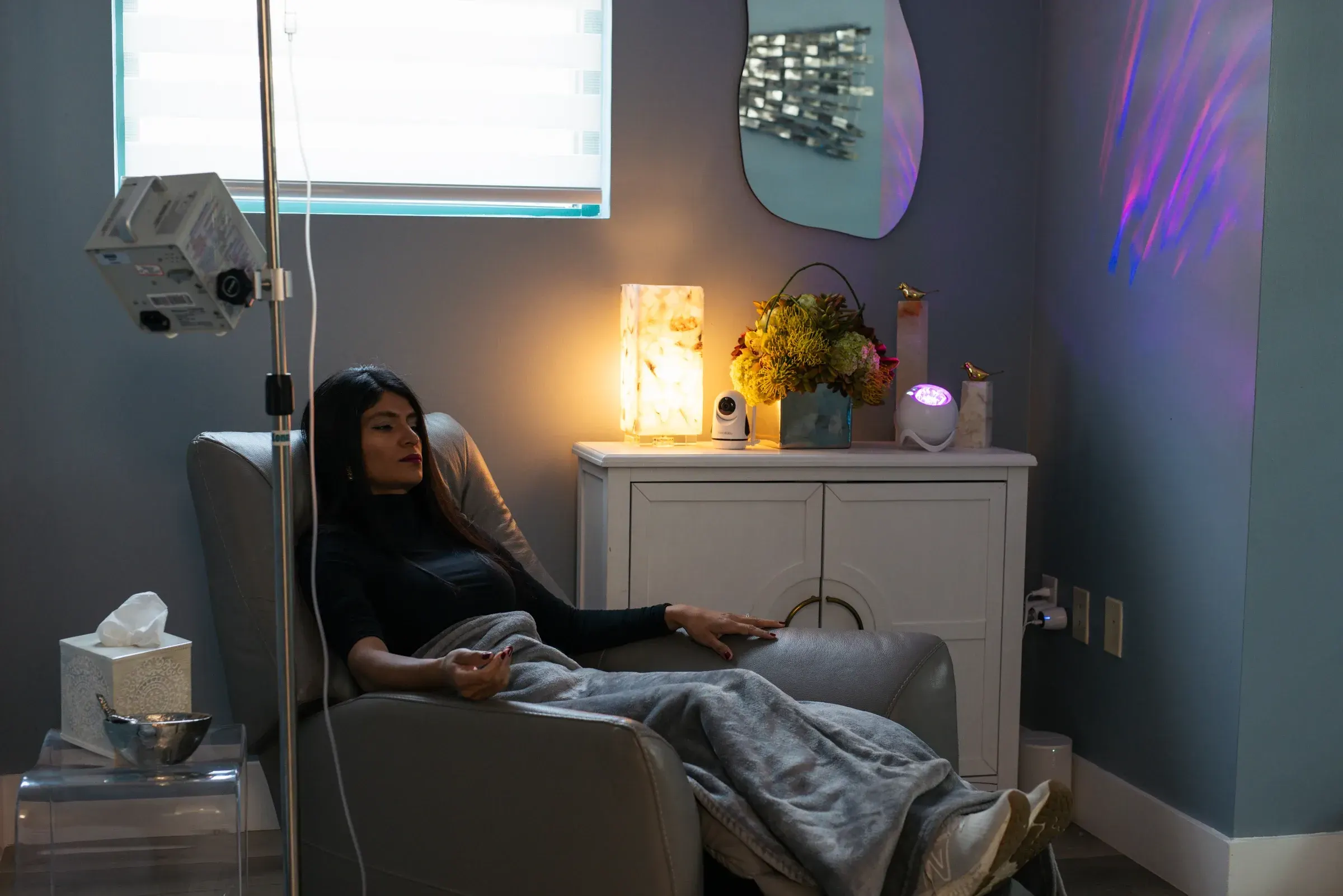
IV ketamine therapy delivers ketamine directly into the bloodstream at carefully controlled sub-anesthetic doses. Like Spravato, it targets the glutamate system and promotes rapid neuroplasticity — the brain's ability to form new neural connections. IV ketamine can provide relief within hours for some patients, making it particularly valuable for individuals experiencing severe or crisis-level depression. A typical initial protocol involves a series of six infusions over two to three weeks.
Why TMS Is Often the First Recommended Next Step
While all three options are effective, TMS therapy is frequently recommended as the first-line treatment after antidepressants for several reasons:
- Non-invasive and drug-free — no injections, no sedation, no systemic medication
- Covered by most insurance plans — including Medicare and many private insurers for treatment resistant depression
- Minimal side effects — the most common is mild scalp discomfort that typically resolves within the first few sessions
- No downtime — patients drive themselves to and from appointments and resume daily activities immediately
- Durable results — many patients maintain improvement for 12 months or longer after completing a course of TMS
Dr. Francis often recommends starting with TMS therapy in Weston FL because it offers a favorable balance of efficacy, safety, and accessibility for most patients with treatment-resistant depression.
What to Expect from TMS Therapy at Refresh TMS
At Refresh TMS in Weston, FL, the treatment experience is designed to feel comfortable and supportive — not clinical or intimidating. Here is what a typical course of TMS looks like:
- Initial consultation — Dr. Francis reviews your history, confirms your TRD diagnosis, and determines whether TMS is appropriate for your specific situation.
- Mapping session — Your first appointment includes brain mapping to identify the precise treatment location and calibrate the magnetic pulse intensity to your individual threshold.
- Treatment sessions — Standard protocols involve 36 sessions over approximately six to nine weeks (five sessions per week). Each session lasts 20 to 40 minutes. You sit in a comfortable chair, fully awake, and can read, listen to music, or simply relax.
- Progress monitoring — Dr. Francis tracks your symptom improvements throughout the course and adjusts parameters if needed.
- Maintenance plan — After completing the initial course, some patients benefit from periodic maintenance sessions to sustain their results.
When to Consider Spravato or Ketamine Instead
TMS is an excellent starting point, but it is not the only path. Dr. Francis may recommend Spravato or IV ketamine in certain situations:
- Urgent symptom relief is needed — Ketamine and Spravato can produce improvement within hours, while TMS typically requires two to four weeks to show results.
- TMS was previously tried without sufficient response — Switching to a different mechanism of action may be more effective.
- Co-occurring conditions are present — Ketamine has shown particular promise for patients with PTSD, chronic pain, or suicidal ideation alongside depression.
- Schedule constraints — Spravato requires fewer total visits than TMS, which may suit patients with demanding schedules.
In many cases, Dr. Francis develops a treatment-resistant depression overview plan that combines approaches — for example, starting with ketamine for rapid stabilization, then transitioning to TMS for long-term maintenance.
Frequently Asked Questions
What is treatment-resistant depression?
Treatment-resistant depression is major depressive disorder that has not improved after trying at least two different antidepressant medications at adequate doses for sufficient time periods (typically six to eight weeks each). It affects roughly one-third of people diagnosed with depression and does not mean that effective treatment is unavailable — it means that different approaches beyond standard antidepressants are needed.
Does TMS therapy work?
Yes. TMS therapy is FDA-cleared for treatment-resistant depression and supported by extensive clinical research. Studies show that 50 to 60 percent of TRD patients respond positively to TMS, and approximately one-third achieve complete remission. At Refresh TMS, Dr. Francis has seen meaningful improvement in patients who had not responded to multiple medications.
How many TMS sessions are needed?
A standard TMS treatment course consists of 36 sessions delivered over approximately six to nine weeks, with five sessions per week. Each session lasts between 20 and 40 minutes. Some patients begin noticing improvement within the first two to three weeks, though the full benefit often develops gradually over the entire treatment course. Maintenance sessions may be recommended after the initial course is complete.
Can TMS therapy be combined with antidepressants?
Yes. TMS therapy is commonly used alongside existing antidepressant medications. Many patients continue taking their current prescriptions during TMS treatment, and Dr. Francis will work with you to determine whether medication adjustments are appropriate as your symptoms improve.
Take the Next Step
If antidepressants have stopped working — or never worked well enough — you deserve to know what other options exist. Treatment-resistant depression in Weston, FL does not have to mean untreatable depression. Under the care of Dr. Paula-Ann Francis, MD, Refresh TMS provides compassionate, expert guidance through every step of the treatment selection process.
Schedule a free consultation at Refresh TMS in Weston, FL — (754) 216-0840
References
- Rush AJ, Trivedi MH, Wisniewski SR, et al. Acute and longer-term outcomes in depressed outpatients requiring one or several treatment steps: a STAR*D report. PubMed (PMID: 17074942) - The landmark STAR*D trial demonstrated that remission rates decline with each successive antidepressant trial, with only about one-third of patients achieving remission with initial treatment.
- O'Reardon JP, Solvason HB, Janicak PG, et al. Efficacy and safety of transcranial magnetic stimulation in the acute treatment of major depression: a multisite randomized controlled trial. PubMed (PMID: 18056220) - This pivotal multicenter RCT established the efficacy of TMS for pharmacoresistant major depression, supporting FDA clearance.
- Daly EJ, Singh JB, Fedgchin M, et al. Efficacy and safety of intranasal esketamine adjunctive to oral antidepressant therapy in treatment-resistant depression: a randomized clinical trial. PubMed (PMID: 30860107) - Phase 3 trial demonstrating that intranasal esketamine (Spravato) plus an oral antidepressant produced statistically significant improvement in depressive symptoms compared to placebo plus antidepressant.
- Murrough JW, Iosifescu DV, Chang LC, et al. Antidepressant efficacy of ketamine in treatment-resistant major depression: a two-site randomized controlled trial. PubMed (PMID: 23982301) - This controlled trial showed that a single IV ketamine infusion produced rapid and robust antidepressant effects in patients with treatment-resistant depression.